
When Should Restaurant Voice AI Transfer a Call to a Human?
Key Takeaways
- Answering is not resolution. Ask what a vendor means when it says AI can handle every call.
- Separate human need from missing data. Physical action, judgment, and authority differ from a question a reliable integration could answer.
- Human help and live transfer are different. The venue should decide whether each need calls for a live conversation or an owned follow-up.
- Test the unanswered path. A transfer feature is incomplete without a clear experience when staff cannot pick up.
- Never fill a safety gap with a guess. Incomplete ingredient or preparation information needs verification, not a confident-sounding answer.
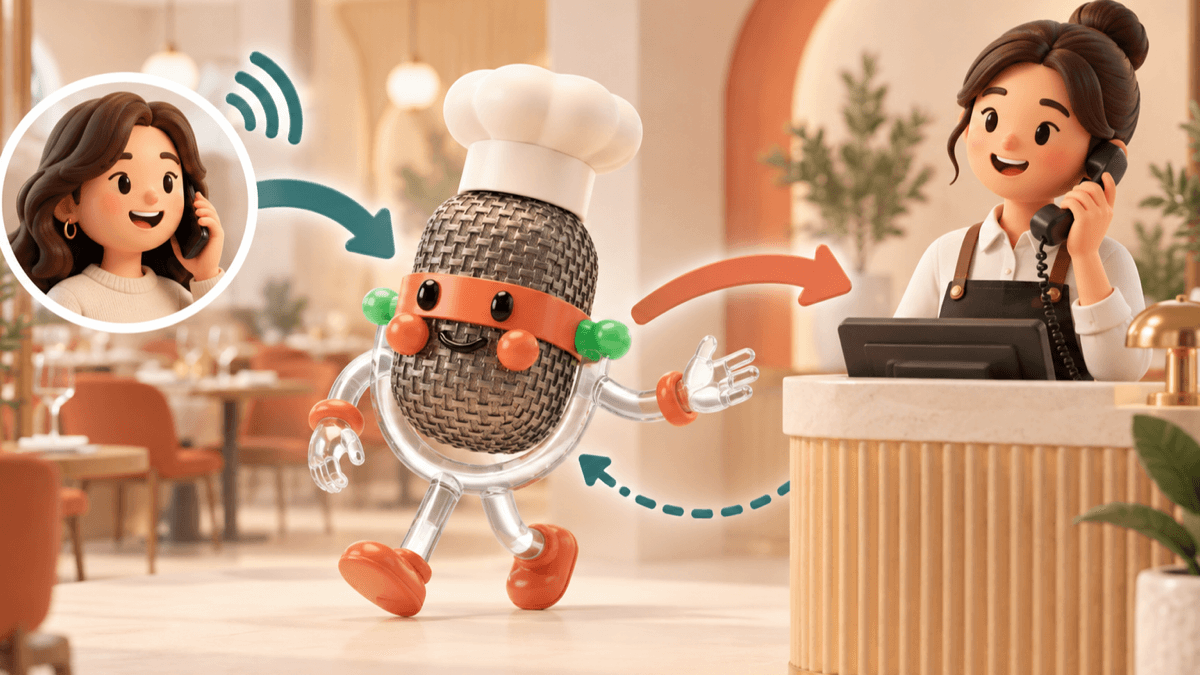
Who helps when the AI cannot finish the job?
The easy demo call is a menu question or a straightforward order. The harder test comes later, when a guest calls to say the family meal they picked up is missing an item and they are already home.
The AI can collect the details. But who checks what happened, decides which remedy is allowed, or looks for a wallet left at the restaurant? Some requests still require a person at the venue. That can be the right outcome.
These ordinary exceptions belong in the buying conversation about restaurant voice AI, alongside menu accuracy and how natural the assistant sounds. The useful question is not whether a voice assistant will ever need human help. It is which calls need it, which calls simply need better data, and what the handoff feels like when staff can or cannot answer.
At TastyVox, we build voice AI for restaurants. Our view is straightforward: a human handoff can be the right outcome. The operating question is whether the guest reaches the right next step without creating unnecessary interruptions for the team.
Can restaurant voice AI really handle 100% of calls?
Ask the vendor to define handle. Does it mean the phone was answered, the caller's intent was identified, a message was saved, or the guest's request was actually resolved without staff?
Those are different outcomes. A call about a lost wallet can be answered successfully while the underlying problem remains open. An assistant can record a refund request without approving or issuing the refund. A connected transfer can still leave the guest repeating their story.
A blanket promise that staff will never need to participate leaves out the restaurant's physical work and decision-making authority. But it would also be misleading to treat every claim about answering calls as a claim about autonomous resolution.
A request that needs a person is not automatically a product failure. It may be the part of the operation that requires someone standing in the building or exercising authority the restaurant has deliberately kept with its team.
There is no universal transfer percentage worth copying. Your call mix, integrations, staffing, and policies determine how much the assistant can finish. A neighborhood cafe and a multi-location group with private dining may have very different needs.
Before accepting an automation rate, ask which calls were counted, how resolution was verified, whether repeat calls were considered, and how requests requiring a person were reported. Keep spam, abandoned calls, saved messages, and genuinely resolved guest requests distinguishable.
Which calls need a person at the restaurant?
The useful distinction is between missing information and work that requires local action or authority. Better data can answer some questions. It cannot physically retrieve a wallet or grant permission the restaurant has withheld.
Use these examples to write your own policy. They are questions to settle with your team, not a universal instruction to transfer every call.
| Caller need | What may require a person | Questions for your venue |
|---|---|---|
| Missing or incorrect food | Checking the order, deciding on a remedy, approving a refund | Which details should the assistant collect? Who can approve a replacement or refund? How does urgency change if the guest is waiting now? |
| Lost property | Physically checking the venue and verifying ownership | Should the guest reach staff immediately or leave a request? Who checks, and how will the guest learn the result? |
| Unlisted ingredient or preparation question | Checking a recipe, supplier label, substitution, or kitchen practice | Who is qualified to verify the answer? What should the assistant say while it is unknown? |
| Live table wait | Current queue, table readiness, party size, and staffing | Is a current, approved estimate available? If not, is a staff conversation useful, or should the assistant explain the limitation? |
| Private event or exception | Availability, negotiation, or approval beyond published policy | Which details can the assistant answer? Does this need a live discussion, a priority message, or a scheduled follow-up? |
Human involvement does not always mean ringing the manager during service. A callback request, a manager notification, or a recorded request may fit the situation better, where those workflows are available and someone owns the next action. An active guest problem may need a different route from a general inquiry for next month.
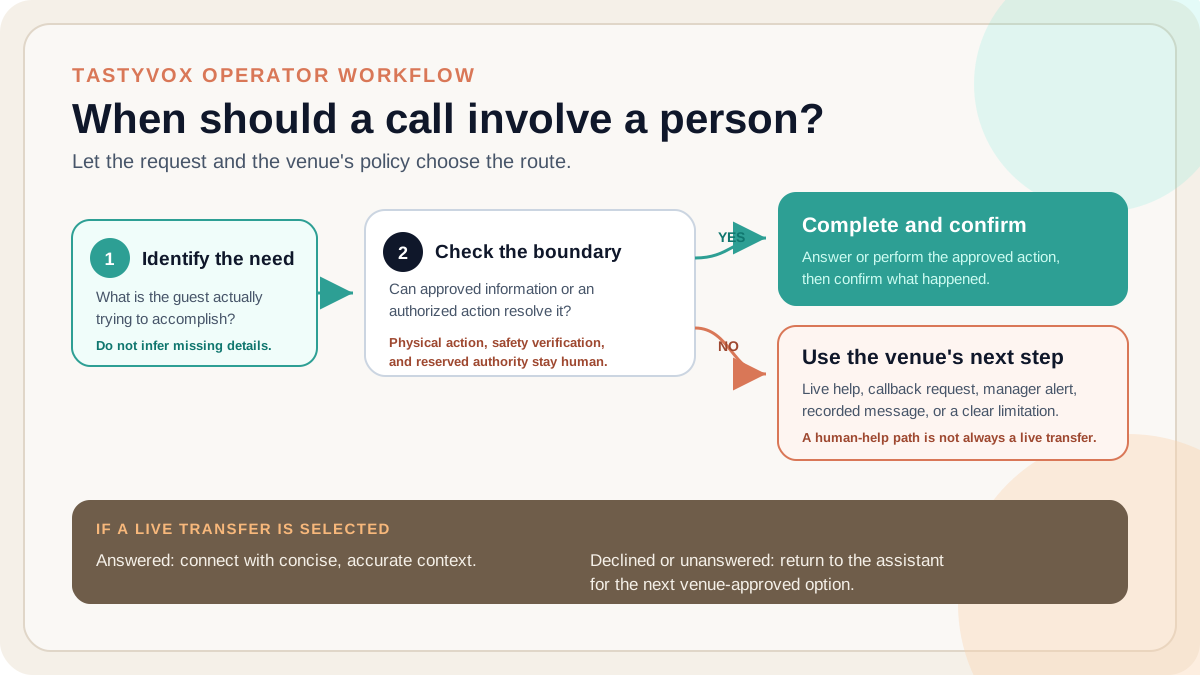
A simple decision path is
- Identify the request. What is the guest actually trying to accomplish?
- Check approved capabilities. Can current information or an authorized action resolve it accurately?
- Choose the venue's route. If not, should the assistant attempt live help, capture a request, notify someone, or explain the limitation?
- Own the outcome. Who reviews what happened and improves the policy or information for the next call?
For franchise groups, establish shared safety and service standards, then define which location-specific details may vary. A central policy is only useful if it reaches a person who is actually responsible for that venue.
Should the assistant help first or transfer immediately?
Some callers ask for the manager because that is how they have always obtained an answer. A brief offer to help may resolve a routine question without an interruption. Other callers have already tried the automated route or specifically need a person.
The policy needs to account for both. How many clarification questions are reasonable? Can a caller decline to explain a sensitive issue to the AI? What happens when they repeat their request for a person? Does the assistant recognize that request during an order, not just at the start of the call?
TastyVox's manager-handoff design includes an initial offer of help, recognition of a persistent request for a person, and a return to assistance or message-taking when a transfer does not connect. Availability and setup must be confirmed for the individual venue. These are behaviors to demonstrate in your evaluation, not assumptions to make from a feature label.
The tradeoff is real: immediate forwarding can interrupt staff for questions the assistant could answer; too much questioning can make a guest feel trapped. Ask your vendor to show the policy you want, including how it handles a caller who simply prefers human help.
What is the difference between cold, warm, and screened transfers?
Transfer terminology varies. Traditionally, a warm transfer includes briefing the recipient before completing the handoff, while a cold transfer does not. Some AI products also distinguish a two-way screening conversation. Compare the demonstrated behavior, not just the name on the pricing page. Twilio's transfer definitions and Retell's transfer modes illustrate those distinctions.
| Pattern to evaluate | What happens | What to verify |
|---|---|---|
| Cold or blind transfer | The caller is routed onward without a prior briefing of the recipient. | What happens if the destination is busy, reaches voicemail, or does not answer? |
| Warm transfer with fallback | The system supervises the connection and may provide context before handing over. | Does an unsuccessful attempt actually return the guest to the assistant? What happens next? |
| Warm transfer with screening | The recipient hears the caller's stated need, if known, and can accept or decline before connection. | Is context accurate and brief? Does a decline or timeout lead to the promised fallback? |
An unanswered cold transfer does not always drop the call. The outcome depends on the phone system's routing. Likewise, the word warm does not automatically promise every fallback you want. Request a demonstration with your destination line unavailable. Twilio documents one cold-transfer workflow that can re-route unanswered offers.
What makes screening useful during service?
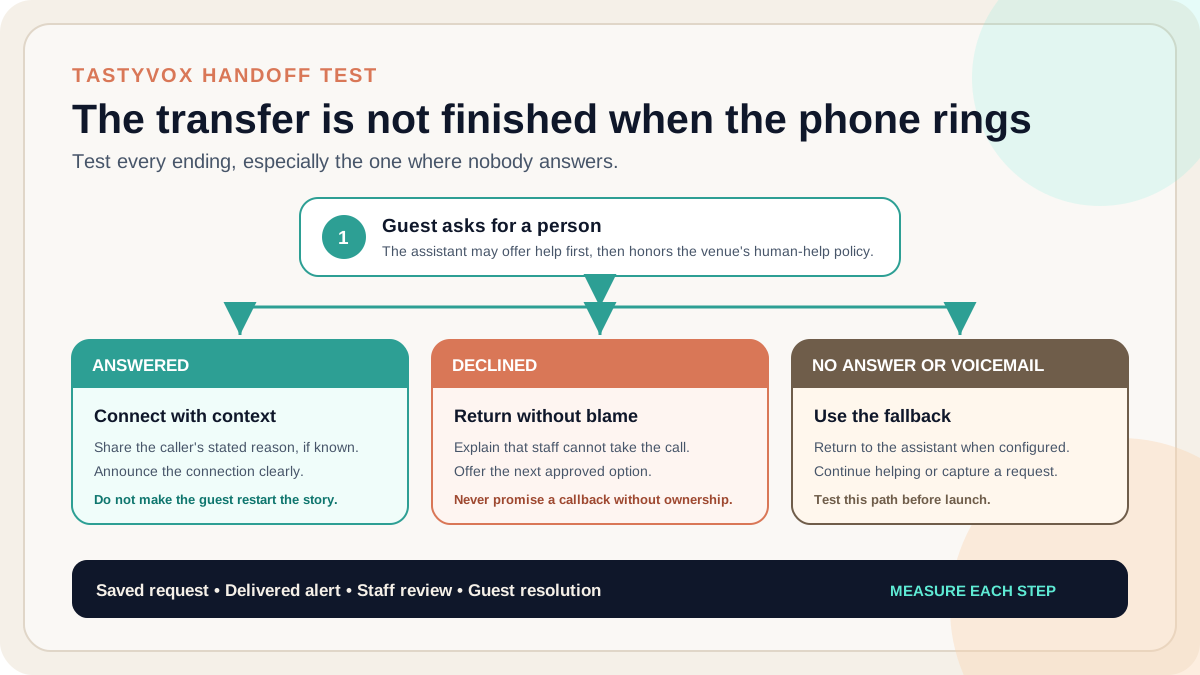
Screening gives the person answering a chance to decide whether they can take the call. It should communicate the caller's need faithfully and briefly, without making staff listen to a full transcript while the guest waits.
What if the caller did not share a reason? Does the assistant say so, or invent one? Can it distinguish a short human greeting from voicemail? Does the manager hear a clear connection announcement before the guest arrives? What does the caller hear if the manager declines?
TastyVox's screened-handoff design distinguishes a known reason from a reason that was not provided. It includes recipient acceptance or decline and a fallback path. Screening adds time, however, and it does not make an unavailable manager available. Test the extra hold time against the benefit to your staff.
What happens when nobody picks up?
This is where the guest experience becomes visible. A polite opening matters much less if the caller is then stranded, sent around a loop, or told to expect a callback nobody has agreed to make.
Ask to hear the entire unsuccessful-transfer flow. Does the assistant explain that staff are unavailable and offer useful next steps? Can it resume the original request without making the guest start over? If it offers message-taking, can the caller decline?
A useful message should preserve the reason for calling, the requested outcome, relevant timing, and an appropriate contact route. It should not invent urgency, copy unnecessary sensitive information, or promise that the manager will respond.
TastyVox's message-handling design separates the saved request from notification and follow-up. Where enabled and configured, staff alerts and scheduled summaries can serve different needs. Saving a message, delivering an alert, and resolving the guest's issue remain separate events.
Before setting a response-time promise, decide who owns it. Is the expectation a review before closing, a callback during a staffed period, or a different action? Can the restaurant meet it during a rush? Does the assistant accurately distinguish a callback request from a guaranteed callback? What is the alternative for a time-sensitive problem that cannot wait?
Test this in the demo: Let the manager's phone ring unanswered. Continue as the guest. Ask what happens next, and check whether the promised message or notification actually exists.
Which escalations need a person, and which need a connection?
Yes, when they supply the specific answer the guest needs, with enough freshness and reliability to use it. An approved menu can support routine questions. A connected waitlist may provide a current estimate. A stale website cannot establish what is happening in the dining room right now.
When reviewing handoffs, separate at least three causes: human action or authority, missing or stale data, and an incomplete venue policy. They require different fixes. A better connection may resolve a live-information gap, but it cannot retrieve lost property or decide who may approve a refund.
Camera-based systems may contribute operating data. For example, Solink describes camera-based drive-thru monitoring across different parts of the lane. That capability is not the same as a verified table-wait estimate for a particular party, and it does not establish an integration with TastyVox.
Before letting an assistant quote a live wait, ask what is actually measured. Is it queue length, elapsed service time, or predicted time to seating? Does the answer account for party size and table readiness? How old can the data become before the assistant must stop using it?
Also test the disconnected state. If the data source fails, does the assistant explain that it cannot confirm the current wait, use an approved alternative, or offer the venue's chosen next step? Review restaurant integration options as operating connections, not a collection of logos.
An integration can reduce a preventable interruption. It cannot replace a missing refund policy or create permission to make an exception.
Ask the vendor to report handoff reasons by category. A single escalation rate cannot tell you whether the assistant reached the right boundary, lacked a useful connection, or followed the wrong policy.
How should voice AI handle allergen requests?
An assistant can repeat explicit, current, restaurant-approved ingredient information. It should not turn an absent ingredient listing into an assurance that a dish is safe. Preparation and cross-contact are separate questions from what appears on the menu. The FDA identifies allergen cross-contact as a retail food-safety concern.
When a guest asks about an ingredient that is not covered, distinguish two jobs: helping the person who is asking now, and improving the information available next time.
For the current guest, who can verify the recipe or preparation? Should the assistant try a live connection, capture a request for verification, or clearly state that it cannot confirm the answer? If qualified staff cannot be reached, the assistant must not substitute a guess or reassure the guest that the food is safe. A routine callback process is also not an emergency-response service.
For future calls, who reviews the missing information, checks its source, approves the wording, and keeps it current after a recipe or supplier change? A recurring question should create a review task, not an automatic new answer. A conversation is evidence of a knowledge gap, not permission for the agent to teach itself a food-safety policy.
These questions deserve particular attention in fine-dining guest service, but the principle applies to every restaurant: resolve today's uncertainty honestly, then improve the approved information through a separate review.
Which controls should belong to the venue?
A transfer policy should make the restaurant's standards repeatable. It should also make it clear which controls are available today, which your team can change directly, which require help from the vendor, and which are only planned.
Use this checklist when evaluating a restaurant virtual receptionist:
- Transfer triggers: Which requests justify live help, and which should become a message or another supported action?
- Guest choice: Can the caller persist in asking for a person without being forced through an unrelated workflow?
- Availability: Which destination is used for each location, and how are staffing and opening hours handled?
- Screening: What context is shared, and can staff accept or decline before the caller is connected?
- Fallback: What happens after no answer, voicemail, a decline, or a failed connection? How are repeat attempts limited?
- Follow-up ownership: Who receives a saved request, how is urgency determined, and what response expectation may be communicated?
- Review: How are missed handoffs, incorrect routing, and unanswered knowledge questions examined and corrected?
Solicitations deserve an explicit policy too. Which sales approaches should be declined, recorded for later, or excluded from immediate notifications? How will the restaurant avoid mistaking a supplier, applicant, or legitimate guest for spam? Filtering should protect staff attention without becoming an excuse to deny human help.
For a multi-location group, ask what corporate controls centrally and what a local manager can change. Then test two locations with different hours or staffing. A configuration screen alone does not prove that calls follow those choices.
What should a pilot measure besides fewer transfers?
A low transfer rate can mean the assistant is helping. It can also mean guests cannot reach anyone. Review outcomes by call intent and include the guest's next step.
- Resolution quality: Was the approved request actually completed or answered correctly?
- Handoff completion: Of attempted transfers, which connected, returned to the assistant, failed, or remained unknown?
- Fallback usefulness: When no one answered, did the guest receive an honest option and leave an actionable request if they chose?
- Follow-through: Was the request received, reviewed, and acted on? Keep each of those stages distinct.
- Guest effort: Did callers repeat details, wait without explanation, or call again about the same unresolved issue?
- Staff impact: Which interruptions were avoided, and which necessary conversations still reached the team?
Exclude internal test calls from customer-outcome reporting, and keep spam separate from guest-service measures. Show both counts and rates so a small sample does not look like a settled result.
Use the same discipline as the seven-question restaurant AI buying checklist: define the baseline, test exceptions, and evaluate the result after staff time and service impact are included.
Summary: direct human attention where it matters
The goal is not to remove people from the restaurant's phone experience. It is to reserve their attention for the requests where human presence, judgment, or authority matters.
Routine questions and unwanted solicitations should not crowd out the guest with a missing meal, an uncertain ingredient, or lost property. Each still needs the appropriate route, which may be a live conversation, an owned follow-up, or an honest explanation of what cannot be confirmed.
Write the policy with your team. Ask the vendor to demonstrate it when the manager answers and when the manager cannot. Confirm what happens to the request afterward.
At your next TastyVox demo, bring a missing-item call, an unanswered manager transfer, and an ingredient question your menu does not cover. Ask us to show the next step for each one. That is not replacing hospitality. It is directing it where people add the most value.
How this was researched
This guide combines restaurant operating scenarios with a review of transfer documentation, food-safety guidance, and TastyVox's handoff design as of September 2026. Transfer labels vary by provider. Examples are illustrative, not customer case studies; capabilities and follow-up arrangements must be confirmed for each venue. No universal transfer rate or customer outcome is claimed.
Want to hear what this sounds like in practice?
Listen to a demo call with a real restaurant menu. No commitment, no sales pitch.
Frequently asked questions
Can restaurant voice AI handle 100% of phone calls?
It can answer every call if the service and phone connection remain available. That does not mean it can resolve every request without staff. Physical tasks, safety verification, and decisions outside approved policy may still need a person. Ask the vendor to report answered, identified, transferred, recorded, and resolved calls separately.
Does a warm transfer guarantee that a manager will answer?
No. A warm transfer can supervise the connection and provide context, but it cannot guarantee availability. Verify what the caller experiences after no answer, voicemail, a decline, or a technical failure.
Should every request for a manager trigger an immediate transfer?
The restaurant should define that policy. A brief offer to help may resolve a routine question, while a persistent request for a person deserves a usable human-help path. Avoid both unnecessary interruptions and repeated questioning that blocks the guest.
What should happen if staff cannot take the call?
The assistant should explain the situation and offer the next steps the venue actually supports. That may include continued assistance or a message. A callback request must not become a guaranteed response-time promise unless the restaurant has authorized and can fulfill it.
How should voice AI answer an allergen question it cannot verify?
It should state the limitation, avoid any safety assurance, and follow the venue's route for qualified verification. Reviewing the knowledge gap later is useful, but it does not answer the current guest's question. The assistant must not infer safety from missing menu data.
What percentage of restaurant calls should AI transfer?
There is no universal target. Call mix, approved actions, available integrations, and venue policy affect the rate. Measure correct resolution, appropriate escalation, fallback quality, repeat contact, and staff effort rather than optimizing for the fewest transfers.
See how TastyVox sounds with your menu.
Book a 20-minute call and we'll walk through how it works for your specific restaurant.