
From Ring to Kitchen Ticket: The Technical Architecture of Reliable Restaurant Voice AI
Key Takeaways
- Real-world restaurant calls involve extreme complexity: background noise, heavy accents, and heavily customized modifier menus.
- Response latency under 800ms is required to maintain the illusion of seamless conversation without awkward pauses.
- An intelligent system must gracefully handoff to a human with full order context when it hits an edge case.
- True reliability isn't about vanity AI metrics; rather, it hinges on Order Completion Rates and successful order handoff.
The Challenge: Demos vs. Reality
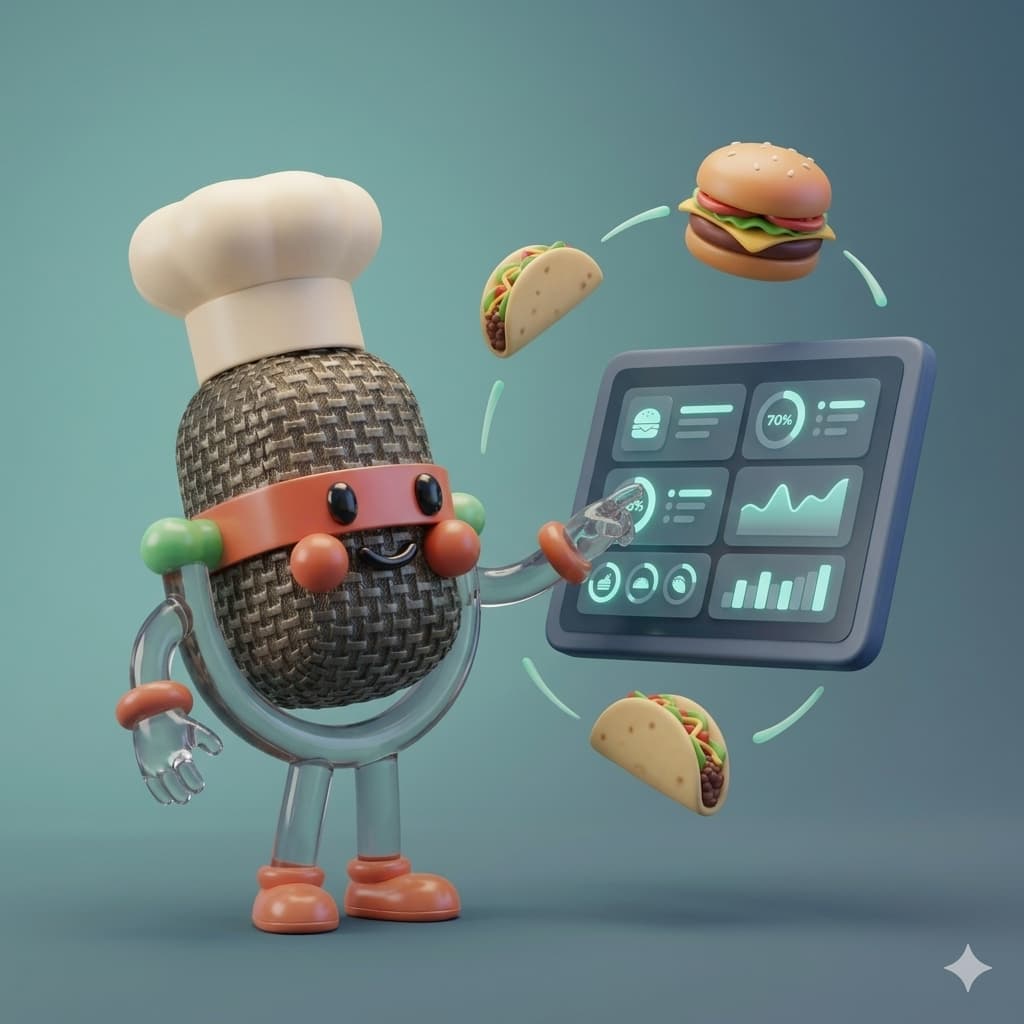
A voice AI demo in a quiet room is surprisingly easy to build. But an AI system operating successfully during a frantic Friday dinner rush, with five conflicting custom modifications, screaming background noise, and real-time menu item shortages, is an entirely different engineering challenge.
Many tech teams build systems that look impressive on paper but shatter under real restaurant conditions.
The core problem? A restaurant AI must process language accurately, consult a large logic database of modifiers, and route the finalized order through a tested restaurant workflow, all while keeping the conversation responsive.
Action: Engineering the 800ms Latency Budget
To build a robust pipeline, engineers focus ruthlessly on latency. If a caller finishes speaking and the system pauses for 2 seconds to think, the caller assumes the line is dead and hangs up.
The entire data pipeline must complete its cycle in under 800ms
- Speech Recognition (100–300ms): Cutting through caller accents and car speakerphone distortion.
- Natural Language Understanding (50–150ms): Realizing "I want the chicken" means the "Fried Chicken Sandwich", not the "Chicken Salad".
- Menu Logic (50–100ms): Validating the "light sauce" request against the specific sandwich constraints.
- LLM Generation & TTS (100–300ms): Instantly streaming the verbal response back to the caller.
The best systems utilize aggressive streaming. The AI begins speaking the very first word of its response while the backend is still generating the rest of the sentence.
Outcome: Graceful Failures and Clean Kitchen Tickets
When the architecture holds up, the outcome is a clean digital order reaching the restaurant's configured handoff workflow. With native GoTab integration, that can include mapped POS items; other restaurants may use an available Clover or Square connection or Live KDS.
However, a truly reliable system knows when it has failed. If the caller asks a deeply ambiguous question or the system's confidence score drops below a safe threshold, the engine triggers a graceful human handoff.
A seamless handoff transfers the call to a human host along with the context of what was already ordered. The caller doesn't have to start over, and the host isn't flying blind.
What are the metrics that actually matter?
Look past vanity metrics like "minutes saved."
Instead, operators should scrutinize the Order Completion Rate (what percentage of started orders successfully reach the configured restaurant workflow?) and the Correction Rate (how frequently the AI had to ask the caller to repeat themselves).
Transfer and fallback rates should be reviewed against the restaurant's call mix and escalation rules, not treated as a vanity benchmark.
How this was researched
These insights come from TastyVox's production operation, controlled call testing, and failure-mode analysis across complex restaurant menus.
Want to hear what this sounds like in practice?
Listen to a demo call with a real restaurant menu. No commitment, no sales pitch.
Frequently asked questions
What is the ideal response latency for restaurant voice AI?
Under 800ms from the caller finishing their sentence to the AI beginning its response. Longer than that and the conversation starts to feel unnatural.
How does voice AI handle 86'd items?
Behavior depends on the configured menu connection. Native integrations can support real-time availability updates; standalone workflows require an agreed process for keeping menu availability current.
What happens when the AI can't understand a caller?
Good systems detect this through low confidence scores and transfer to your staff with context, what the caller has already ordered and where the conversation got stuck.
How accurate are phone orders taken by AI?
Published benchmarks range from 95–99%. Real-world accuracy depends heavily on menu complexity, modifier density, and the specific ASR engine handling accent and noise variation.
See how TastyVox sounds with your menu.
Book a 20-minute call and we'll walk through how it works for your specific restaurant.